



Table of contents
Definitely! There are job opportunities both in Poland and abroad, and the outlook for the coming years is positive. Explore the opportunities the sector has to offer and take a closer look at one of them – the qualification ‘Operator of machinery and equipment for earthworks and roadworks’.
A national and international perspective
According to a report by the European Construction Observatory (link to the key findings of the analysis), 11 million new construction workers will need to be trained across Europe by 2030. And if all EU objectives continue to be pursued, the construction sector may need around 3.6 million additional workers by 2030 compared with 2024.
Interestingly, the proportion of women in the sector has increased – from 1.15 million in 2015 to 1.5 million in 2024 (from 9.2% to 11% of construction workers).
What about Poland? At the end of 2025, Statistics Poland (GUS) reported (link to the summary) that, compared with the fourth quarter of 2024, the share of job vacancies for plant and machine operators and assemblers had increased by 1.8 percentage points to 17.8%.
Who is this sector right for?
Construction is a field that needs roofers and energy systems installers as well as architects and engineers. There are also jobs for IT specialists and public procurement professionals.
The demand for workers in this sector is also clearly reflected in this year’s list published by the Ministry of National Education (link to the notice). Workers in demand include concrete workers, roofers, carpenters and operators of various types of machinery. Among the many specialisations needed in the sector is the qualification ‘Operator of machinery and equipment for earthworks and roadworks’.
How can you gain the right qualification and enter the profession?
You can gain this qualification at a stage I sectoral vocational school. You can also take examinations administered by one of the Regional Examination Boards and obtain a vocational certificate. Check the examination entry requirements and the addresses of the examination boards on the qualification page in the Integrated Qualifications Register (IQR).
Duties and requirements
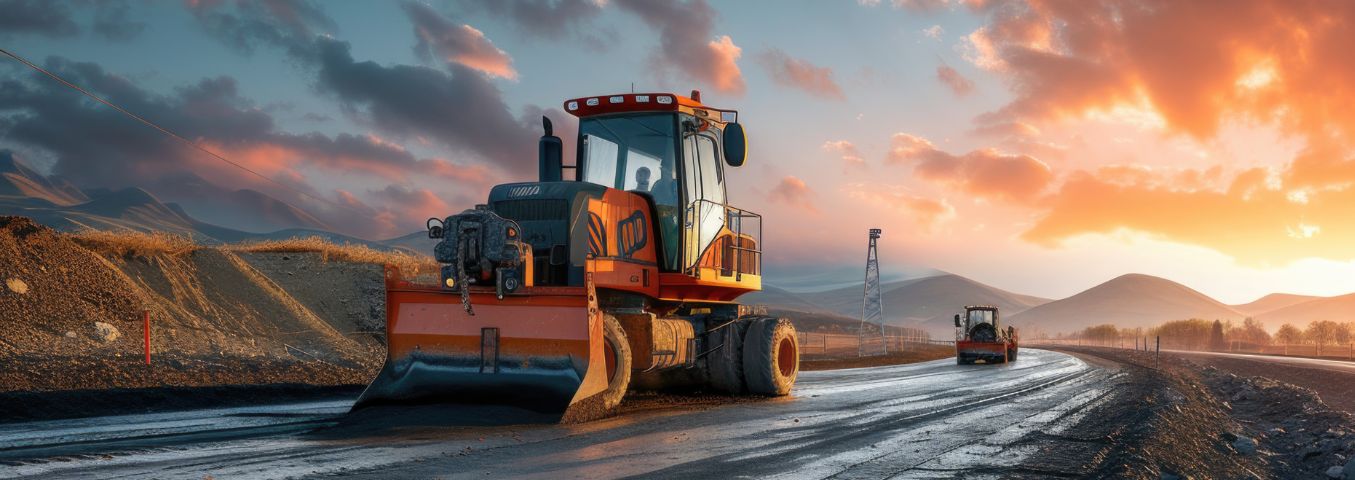
What does an operator do? The job mainly involves operating and maintaining machinery and equipment used in roadworks. Operators build roads and bridges and repair road surfaces. This is why qualities such as accuracy, reliability, perseverance and patience are particularly important in this profession.
Operators can find employment in, among others:
- general construction and road construction companies,
- companies carrying out earthworks,
- municipal cleaning and maintenance companies,
- open-cast mines and scrap metal and non-ferrous metal yards,
- companies responsible for maintaining urban green spaces.
Advantages and disadvantages
Working as an operator has both advantages and disadvantages. It is worth considering them carefully so that you can enter the profession with a clear understanding of what it involves. The job certainly requires physical effort and is carried out in changing weather conditions. You will also spend many hours sitting down. It may therefore have a negative impact on your health. But there are positive aspects too. Reports indicate strong demand in Poland and abroad for workers with this qualification. Above-average earnings in this profession and opportunities for development are also worth considering.
Is it worth it?
Today, construction is a modern sector offering good pay. Working as a specialist in this field can certainly be attractive to people who do not want a desk job, like to get things done and want to see tangible results from their work. Choosing a qualification such as ‘Operator of machinery and equipment for earthworks and roadworks’ is an investment in practical skills that are increasingly in demand across Europe. Turn your plans into recognised qualifications and enter the labour market with a strong advantage.
Explore qualifications related to the sector in the Integrated Qualifications Register, including:
Sectoral vocational education:
Operator of machinery and equipment for earthworks and roadworks
Assembly of building structures
Organisation and supervision of construction works and preparation of cost estimates
Railway construction technician
Market qualifications:
Operation and maintenance of robotic workstations
Stevedore/slinger for heavy oversized loads – wind turbine specialisation
Higher education: